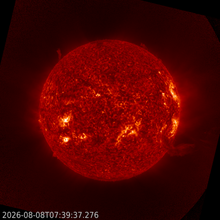
The STCE's SC25 Tracking page has been updated to reflect the latest evolution of some critical space weather parameters for the ongoing solar cycle 25 (SC25).
view
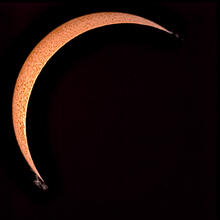
The solar telescopes of the Royal Observatory (USET) observed the partial -as seen from Belgium- solar eclipse of 12 August 2026.
view
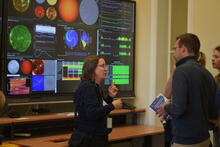
What goes on inside the walls of the Space Pole institutes in Uccle?
view

The Journal of Space Weather and Space Climate (JSWSC) has opened a Topical Issue (TI) "Space Climate: From Solar Variability to Terrestrial Impacts".
view
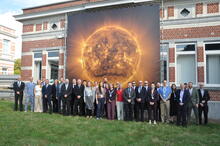
From September 7 to 10, military and civilian space weather experts gathered at the STCE to discuss key advances and challenges in military space weather. The STCE, in collaboration with the METEOWING of the Belgian Armed Forces, had the pleasure of hosting.
view
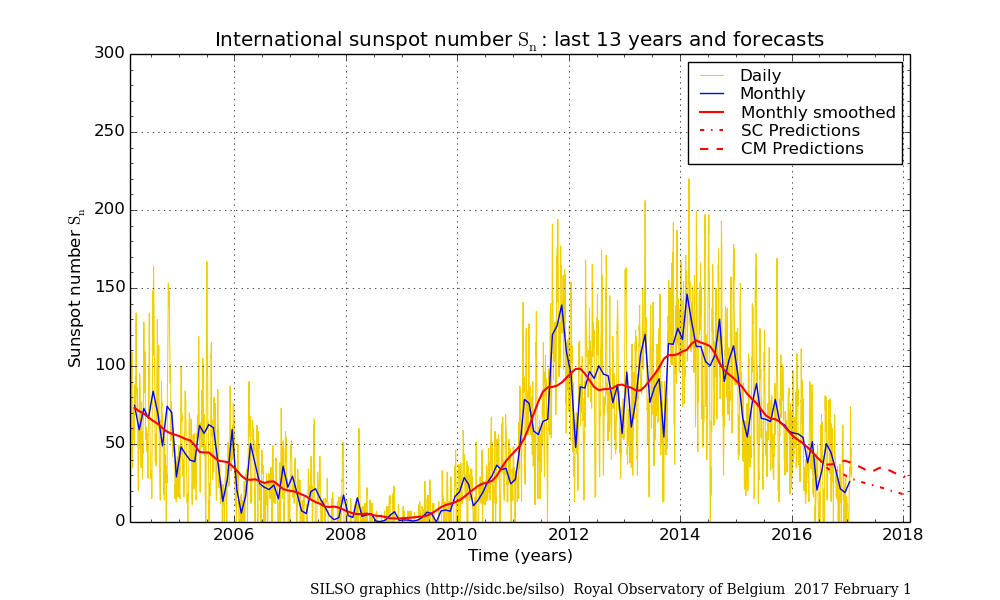 The STCE does Fundamental Research.
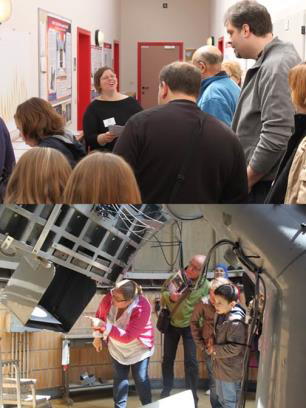 The STCE does public outreach during the STCE Annual Meeting and the Open Doors of the Space Pole in Uccle.
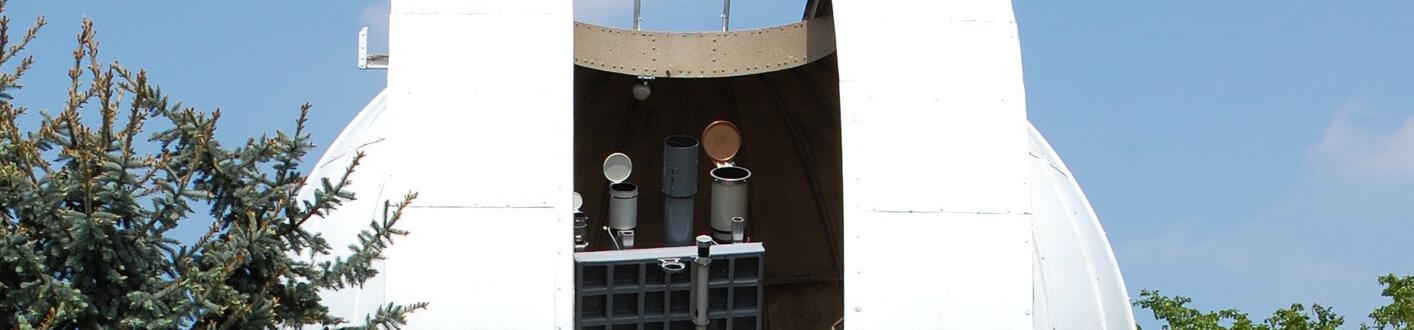
One of the highlights of the Open Doors is always a visit to the Solar Dome. A small introductory presentation is first given in the corridor of the SIDC. Skilled observers and space weather forecasters explain in laymen terminology what sunspots are, how they are observed, why these observations are so important, and how solar eruptions affect us and our technology. Then, the small groups of 10-15 people are guided stairs towards the top of the solar dome. There, the various solar telescopes are shown and their specific applications are discussed. Weather permitting, the visitors can also make solar observations using a projected solar image from the white light solar telescope. During and after the visit, there is plenty of opportunity to ask questions to the guides.
Zircon - This is a contributing Drupal Theme
Design by
WeebPal.