- Table of Content
- 1.Three Decades ...
- 2.ASPIICS is ali...
- 3.PROBA2 Observa...
- 4.Review of spac...
- 5.The SIDC Space...
- 6.International ...
- 7.Geomagnetic Ob...
- 8.STCE in action...
2. ASPIICS is alive and well!
3. PROBA2 Observations
4. Review of space weather
5. The SIDC Space Weather Briefing
6. International Sunspot Number by SILSO
7. Geomagnetic Observations in Belgium
8. STCE in action: courses and show!
Three Decades of Global Oscillation Network Group (GONG)
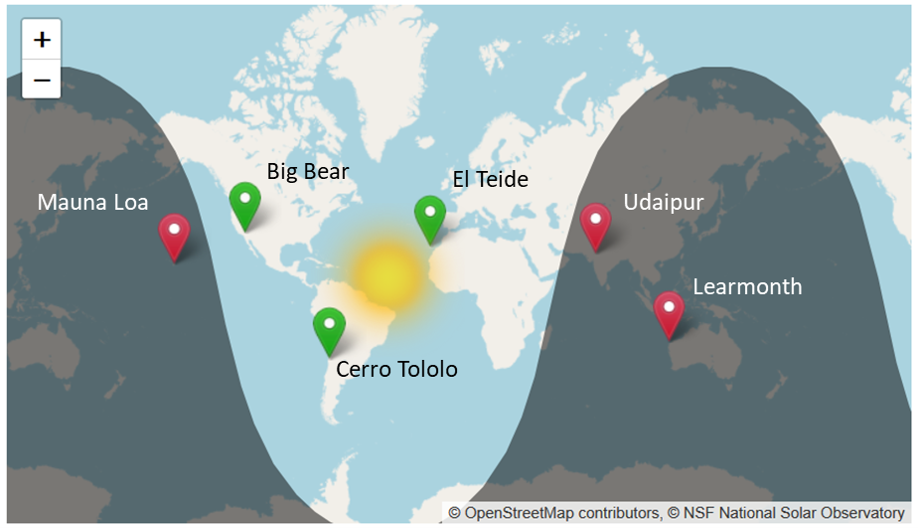
A recent review article authored by Jain et al. (2026 - https://doi.org/10.1007/s11207-026-02639-9 ) highlighted the instruments and achievements of the Global Oscillation Network Group (GONG - https://gong.nso.edu/ ). This network exists for 30 years now, and still provides continuous, high-quality helioseismic and magnetic data, significantly advancing solar physics and space weather research. The project was originally proposed in the mid-1980s, but due to the time required for the site location of the observing stations and the development of the instruments, GONG started its observations in 1995. It consists of 6 sites about equally distributed across longitudes to minimize diurnal gaps. The stations are located in El Teide (Spain), Cerro Tololo (Chile), Big Bear (USA), Mauna Loa (USA, Hawaii), Learmonth (Australia), and Udaipur (India). The Mauna Loa site has been temporarily shut down following the volcanic eruption in 2022. GONG maintains a high duty cycle of about 86% with overlapping observations for redundancy.
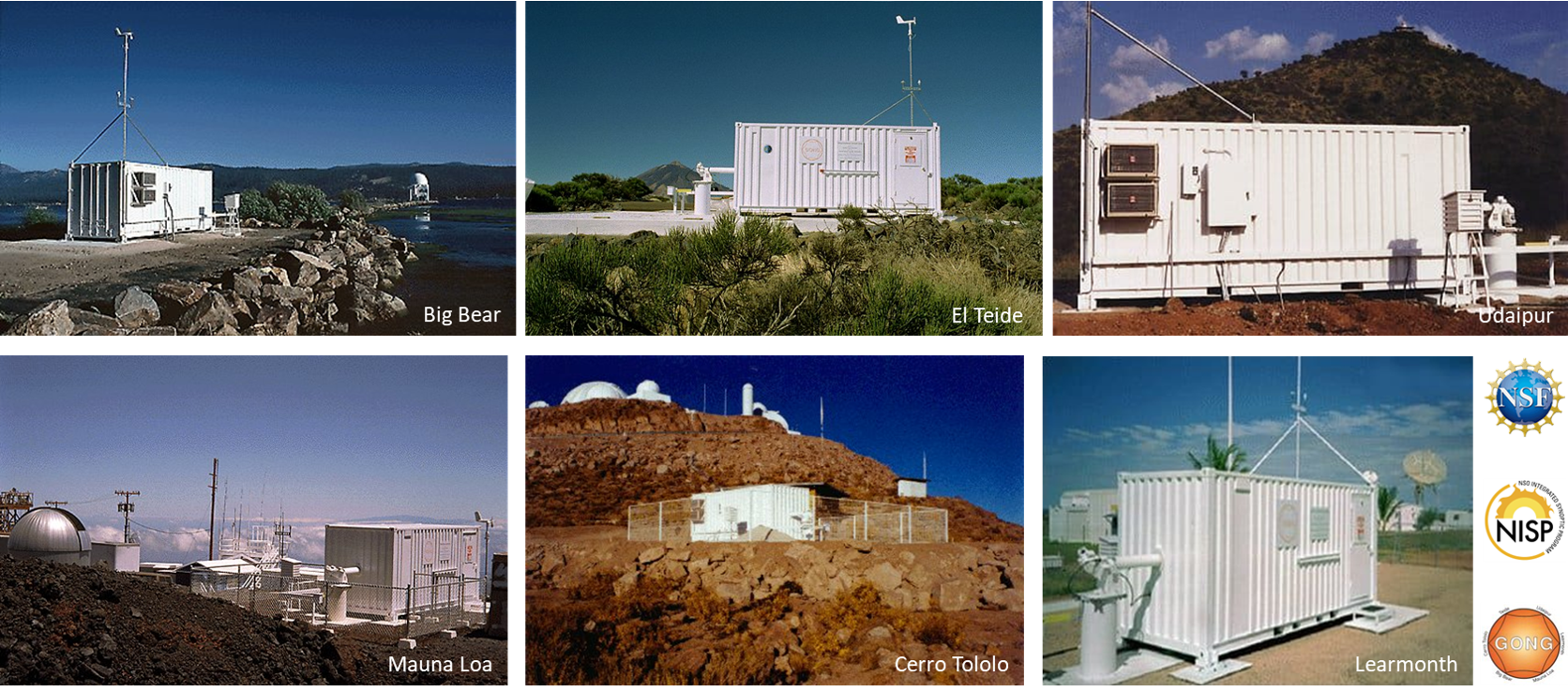
GONG's instruments have been designed for high sensitivity, stability, and continuous operation, with major upgrades performed over the 3 decades. These upgrades also increased the data volume, improved the image quality, and enabled real-time data transmission. The instruments are housed in a shipping container (see composition underneath). The main telescope has a 7-cm aperture, and a nifty filter system allows observations in white light, in H-alpha (656.28 nm; since 2011) and also provide magnetograms.
GONG's primary goal and main contribution has been in the area of the helioseismology, such as the differential rotation, the solar interior, the solar dynamo, the meridional flows,... Also the hemispheric and latitudinal asymmetries, as well as understanding sub-surface flows near active regions are prominent fields of study. Helioseismology is a branch of solar research that is very similar to seismology on Earth, where by studying the waves induced by earthquakes, scientists get an idea on the Earth's interior. Indeed, by carefully "listening" to the up and down movements all over the solar surface, helioseismologists get a pretty good idea on the specifics of the solar interior. The 86-page article by Jain et al. provides an extensive discussion of the GONG contributions into this field of research.
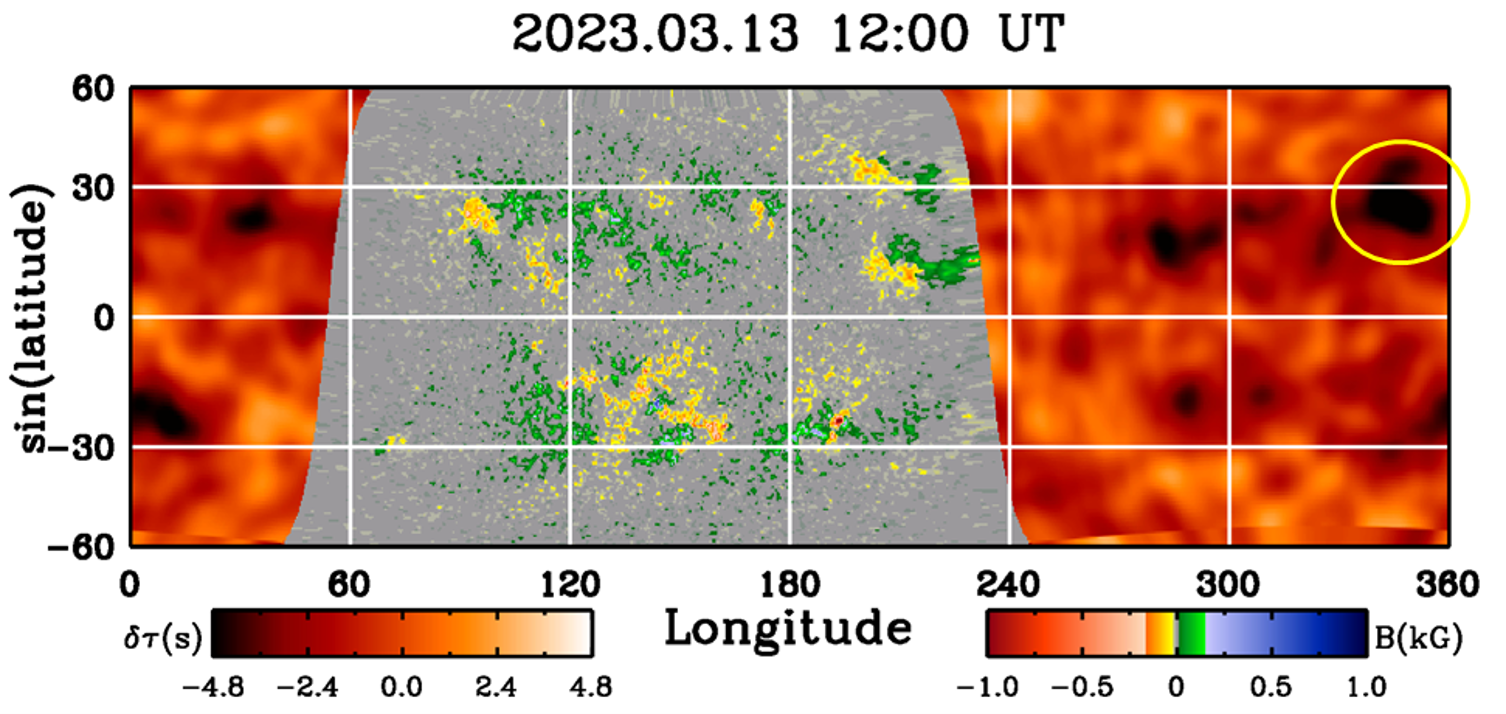
GONG strongly supports the space weather domain as well. By studying the related acoustic waves that are travelling through the solar interior, researchers can virtually "see" any rather big, active region that may be present on the Sun's farside (as seen from Earth; see an example above from this STCE newsitem https://www.stce.be/news/635/welcome.html ). Applying advanced helioseismic techniques, synoptic maps now include the Sun's farside thus aiding in active region detection and space weather forecasting. Incorporating these farside active regions improves space weather prediction accuracy, especially for solar wind and flare forecasts. These maps remain an essential back-up for images by the Solar Orbiter and STEREO-A when these satellites are not observing the (entire) Sun's farside.
GONG magnetograms, initially designed for helioseismology, are now vital for space weather monitoring and modeling. Synoptic maps constructed from GONG data are prime input for models such as the Potential-Field Source-Surface (PFSS; STCE newsitem at https://www.stce.be/news/664/welcome.html ) model which in turn are then used to study the solar corona and forecast the solar wind with models such as WSA-ENLIL (https://www.swpc.noaa.gov/products/wsa-enlil-solar-wind-prediction ) and EUHFORIA (https://swe.ssa.esa.int/ral-euhforia-e-federated ). These magnetograms also reveal the evolution of the global magnetic field over the solar cycle, including streamer belts and coronal holes.
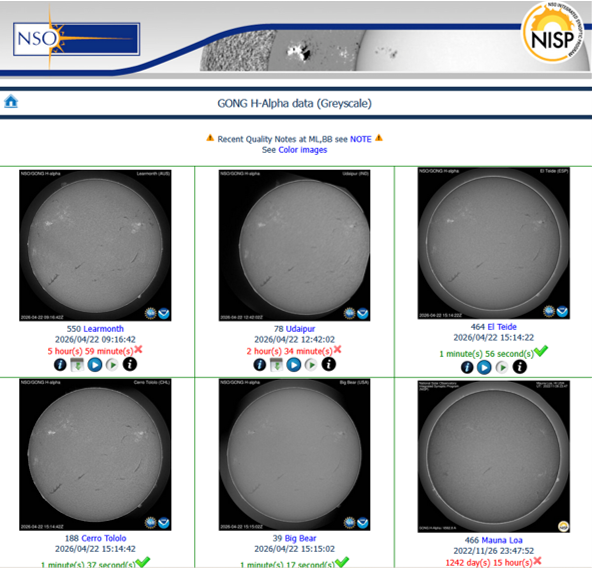
GONG intensity images and H-alpha observations support solar activity monitoring and research. Intensity images added in 2006 show sunspots, pores, and plages, though the small pores are still missing. Daily intensity images now support total and solar spectral irradiance data records, improving irradiance models. The H-alpha observations started in 2010, providing essential, near real-time data for space weather forecasts (see image above). GONG H-alpha data are also a valuable help in the study of filament magnetic fields, their eruptions, and other specific features such as magnetic chirality. Filament oscillations detected via GONG aid in early eruption signatures and magnetic diagnostics.
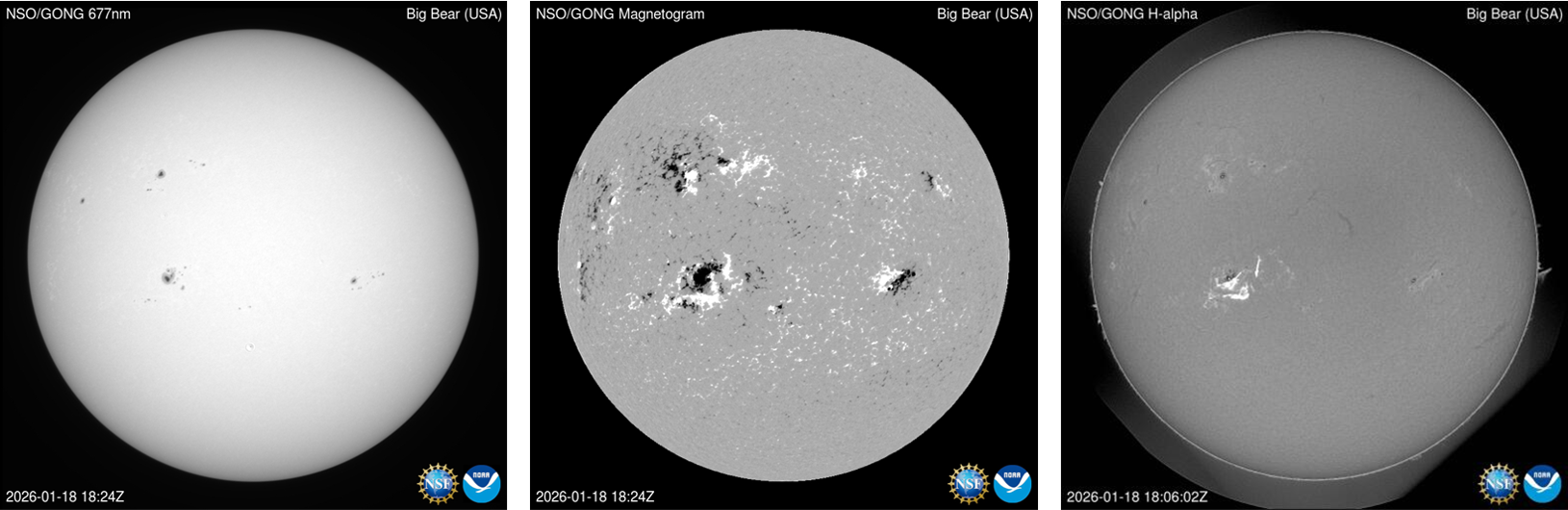
GONG full-disk imagery of the Sun in white light, magnetogram and in H-alpha near the time of the X1 flare on 18 January 2026 (STCE newsitem at https://www.stce.be/news/800/welcome.html ).
It is clear that during its 30-year existence, GONG has made significant contributions in the fields of helioseismology, the solar magnetic field, and by supporting operational space weather services. Following the "GONG Classic" (1995) and the GONG+ upgrade (2001), it will probably not come as a surprise that another upgrade -the next-generation GONG ("ngGONG")- has already been approved in 2025. The completion of the final design is expected for 2029, and will then be followed by an estimated five-year period for construction and deployment. To ensure a smooth transition, GONG operations will be maintained until ngGONG is fully operational, with an appropriate overlap period. This network is expected to provide continuous measurements for helioseismic probing of the solar interior, solar activity, surface velocity fields, and magnetic-field evolution over two solar magnetic cycles - spanning more than 44 years.
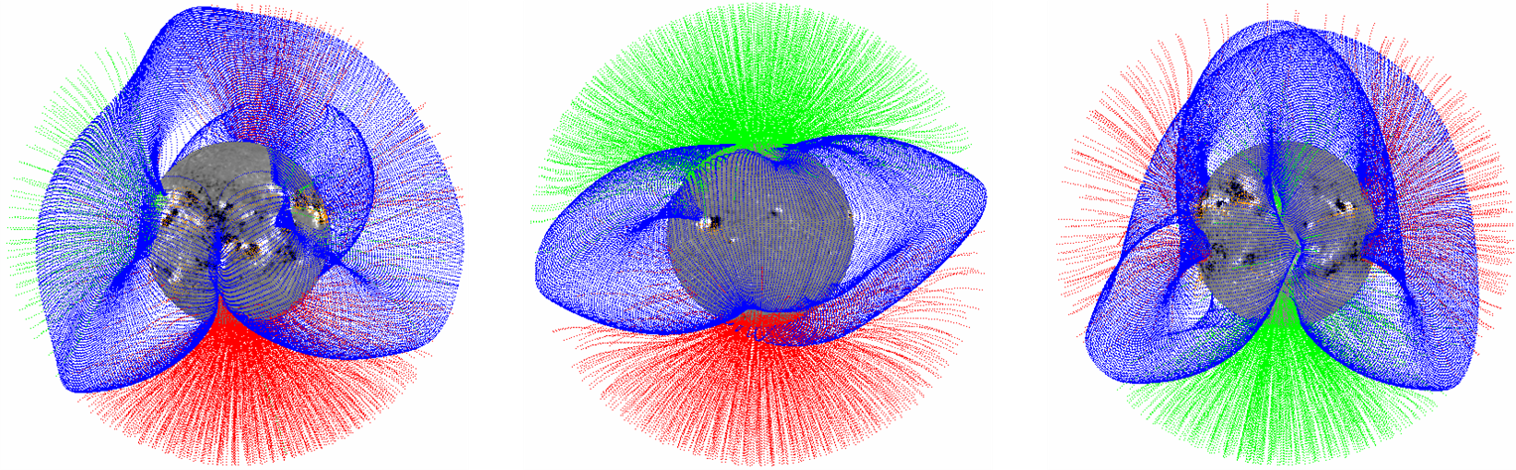
The image above shows the line-of-sight field plot (PFSS model - https://gong.nso.edu/) as deduced from GONG magnetograms for 22 April 2015 (about a year after the previous solar cycle maximum), 2018 (solar cycle minimum), and 2026 (about a year and a half after the current solar cycle maximum in 2024). Note the reversal of the magnetic polarities at the Sun's poles.
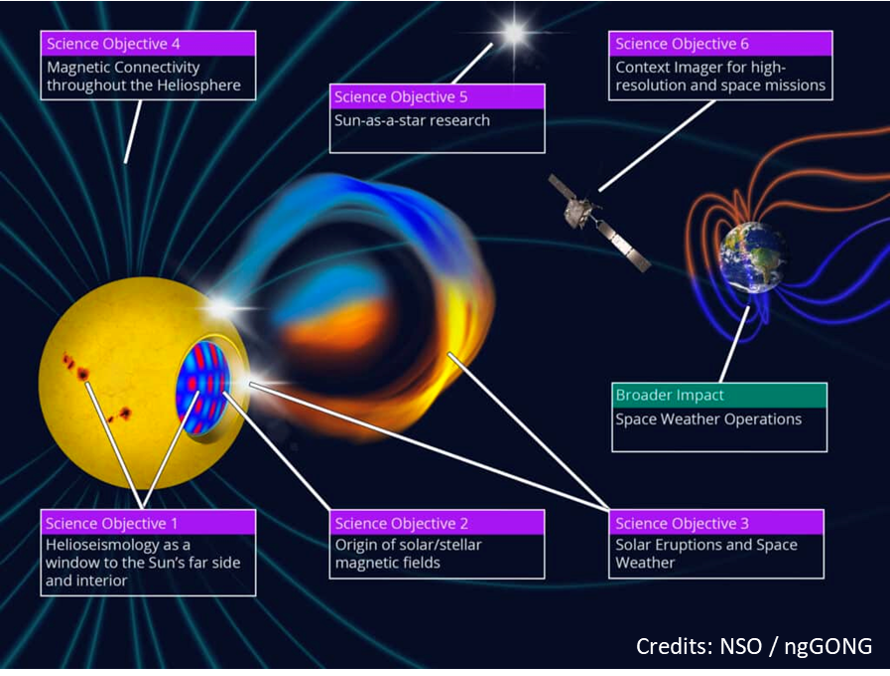
The new network will feature significantly larger aperture telescopes (0.5 m for ngGONG compared to 0.07 m for GONG), while retaining GONG's modular design and utilizing the same site locations. Building on GONG's capabilities, ngGONG will also incorporate instruments for vectormagnetic-field and Doppler-velocity measurements at multiple heights within the solar atmosphere. The ngGONG network will be designed to address six principal science goals, as outlined in the sketch underneath (https://nso.edu/telescopes/nggong/#more ). As part of its broader impacts, ngGONG will continue to support operational space weather forecasting capabilities. The new network will ensure long-term, continuous solar observations vital for scientific and operational needs.
ASPIICS is alive and well!
The total solar eclipse maker onboard the Proba-3 mission - the ASPIICS coronagraph - has passed the last health check. The conclusion of the spacecraft doctors: ASPIICS is alive and well!
ASPIICS is the telescope on the Coronagraph spacecraft, which spent a month in the freezing temperatures of space without any power following an onboard anomaly in February 2026. ESA has been troubleshooting and successfully restored contact.
Andrei Zhukov, principal investigator of ASPIICS: "The poor spacecraft spent a month in the cold. But, it's back and science operations will restart soon! This is a huge relief for the team."
Read more on the ESA story: https://blogs.esa.int/proba-3/2026/04/21/aspiics-is-alive-and-well/
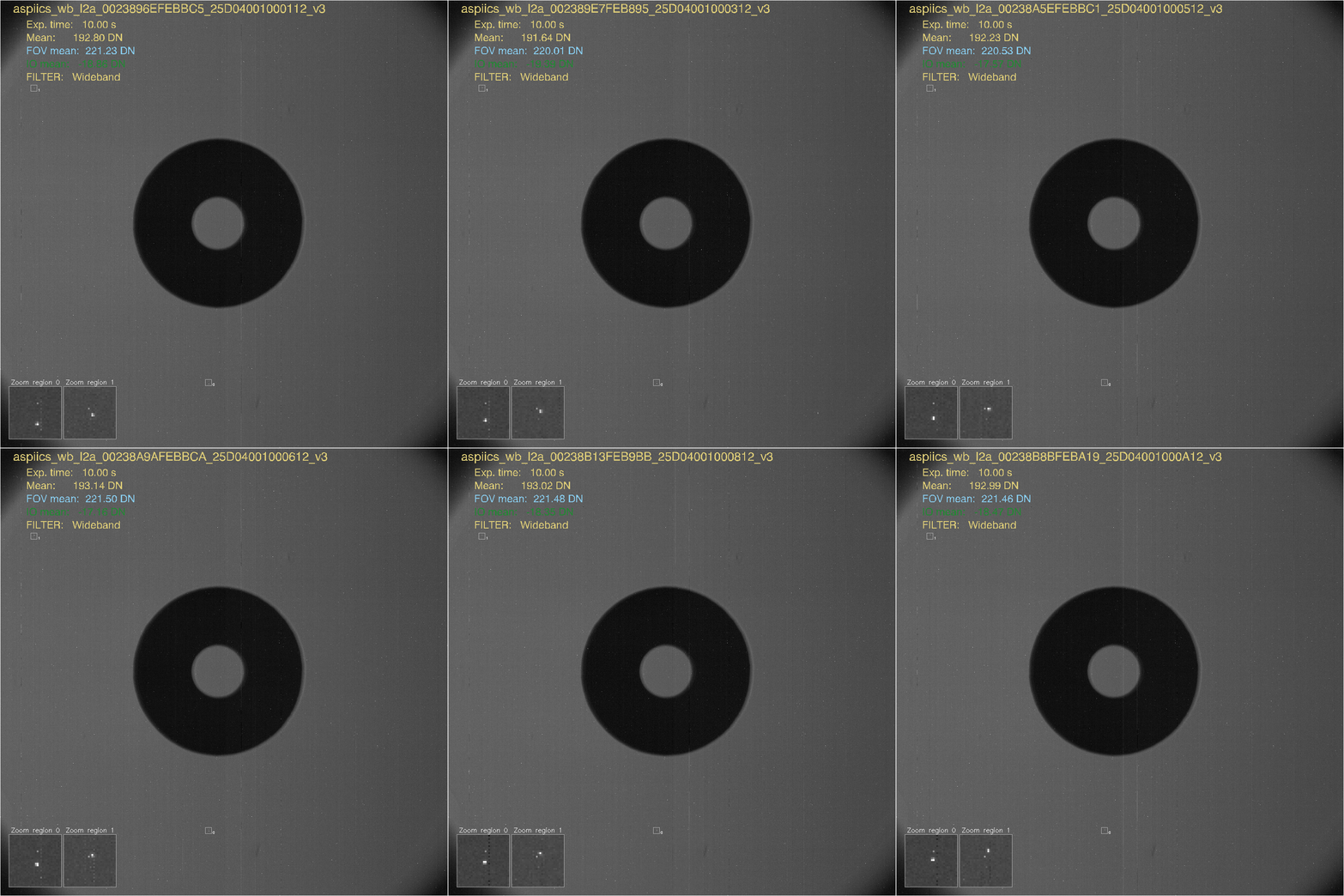
A gif made of a series of starfield images taken by ASPIICS. Two stars are visible as moving dots in the zoomed-in areas in the bottom left corner.
PROBA2 Observations
Solar Activity
Solar flare activity fluctuated from very low to low during the week.
In order to view the activity of this week in more detail, we suggest to go to the following website from which all the daily (normal and difference) movies can be accessed: https://proba2.oma.be/ssa
This page also lists the recorded flaring events.
A weekly overview movie (SWAP week 838) can be found here: https://proba2.sidc.be/swap/data/mpg/movies/weekly_movies/weekly_movie_2026_04_13.mp4.
Details about some of this week's events can be found further below.
If any of the linked movies are unavailable they can be found in the P2SC movie repository here: https://proba2.oma.be/swap/data/mpg/movies/.
Thursday April 16
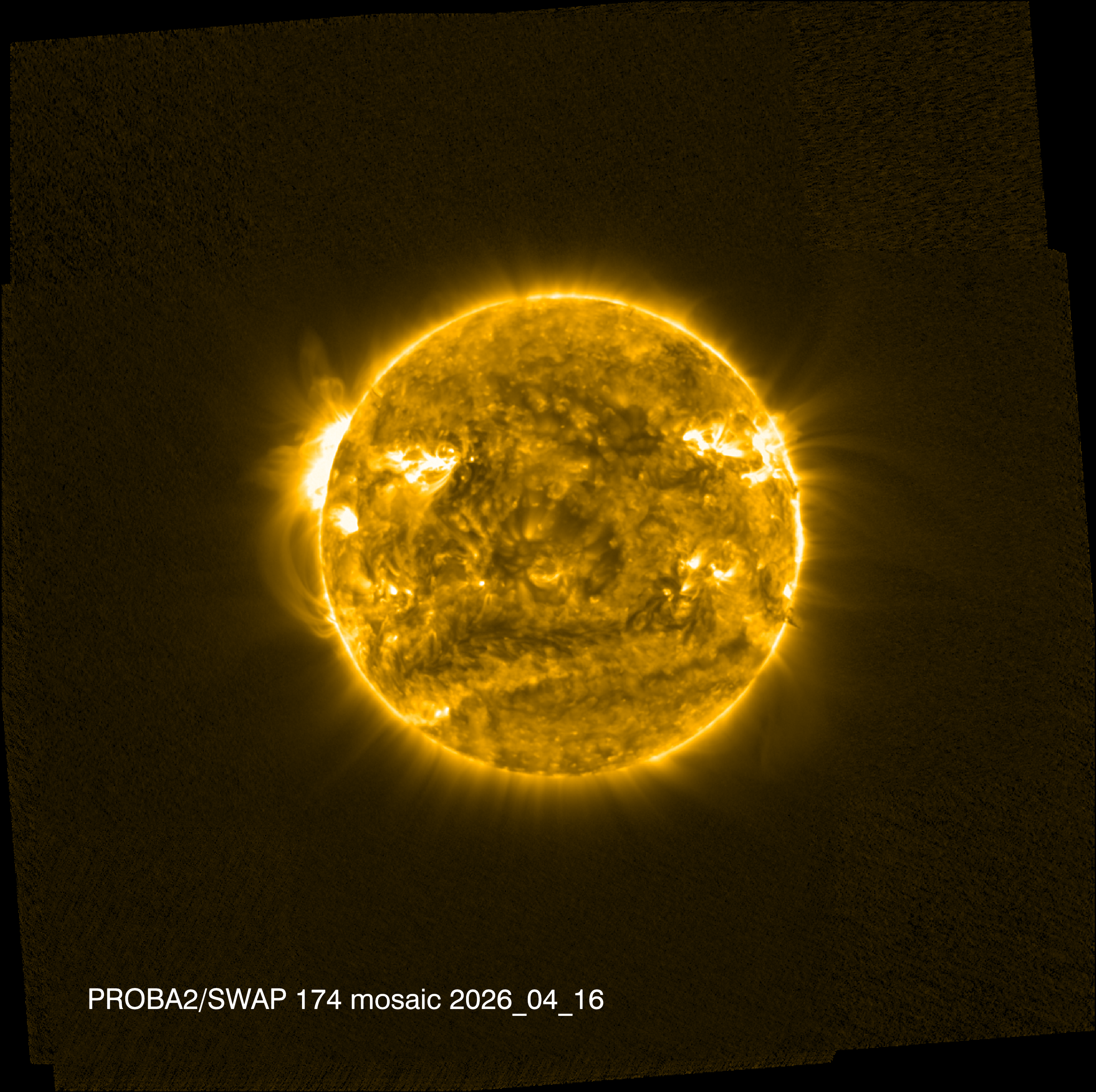
During this week there were no M-class flares observed, only C- and B- flares. We perform weekly mosaics with SWAP, meaning that we acquire off-pointed observations in four directions during one hour in total, then merge them in order to obtain an extended field of view. The above figure shows the configuration of the corona seen in such a mosaic on 2026-Apr-16.
Review of space weather
Solar Active Regions (ARs) and flares
There were 7 sunspot groups visible during the week, from SIDC Sunspot Group 825 ( NOAA 4419) to SIDC Sunspot Group 846 (NOAA 4418). The most complex of these groups was SIDC 825 (NOAA 4319), that reached a beta gamma magnetic field configuration. Only C-class flares were observed, eight (8) in total.
Coronal mass ejections
No clear Earth directed CMEs were observed.
A wide CME (angular width about 90 degrees) was seen erupting towards the SW at 18:00 UTC on 13 April, this CME is back-sided.
A filament located around S20E20 erupted early on 15 April, leading to a CME seen by LASCO C2 at 09:00 UT on 15 April.
A CME from a similar filament eruption erupted on 18 April, seen by LASCO C2 at 09:00 UT on 18 April.
Coronal Holes
At the beginning of the week there were two mid-latitude positive polarity coronal holes (SIDC Coronal Holes 154 and 158) in the western hemisphere, and one (159) crossing the central meridian on April 13, also with positive polarity. A large equatorial coronal hole with negative polarity (SIDC Coronal Hole 147) was observed traversing the central meridian on April 14.
Proton flux levels
The greater than 10 MeV proton flux remained below the 10 pfu threshold throughout the week.
Electron fluxes at GEO
The greater than 2 MeV electron flux measured by GOES 18 and 19 was fluctuating around the threshold most of the week. It went clearly below it on 18 April and stayed so for two days.
Solar wind
The solar wind at the Earth was slow until April 18, when the high speed stream from SIDC Coronal Hole 147 arrived. The solar wind speed then rose to close to 600 km/s with interplanetary magnetic field up to 18 nT and Bz down to -14 nT. At the end of the week, the Earth was still within this fast solar wind stream, but gradually transitioning into a slow solar wind regime.
Geomagnetism
The geomagnetic conditions in the week were quiet until the arrival of the high speed stream from SIDC Coronal Hole 147. On April 18 and 19 Kp rose to 6- (moderate storm levels) and K_Bel up to 5 (minor storm levels).
The SIDC Space Weather Briefing
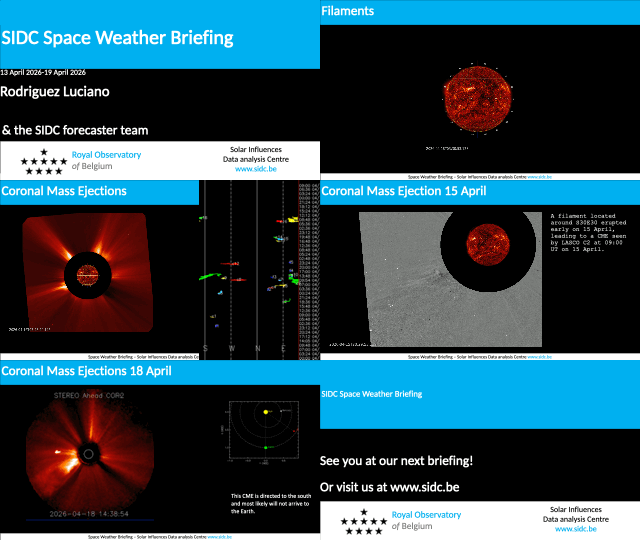
The forecaster on duty presented the SIDC briefing that gives an overview of space weather from 13 to 19 April, 2026.
The pdf of the presentation: https://www.stce.be/briefings/20260420_SWbriefing.pdf
International Sunspot Number by SILSO

The daily Estimated International Sunspot Number (EISN, red curve with shaded error) derived by a simplified method from real-time data from the worldwide SILSO network. It extends the official Sunspot Number from the full processing of the preceding month (green line), a few days more than one solar rotation. The horizontal blue line shows the current monthly average. The yellow dots give the number of stations that provided valid data. Valid data are used to calculate the EISN. The triangle gives the number of stations providing data. When a triangle and a yellow dot coincide, it means that all the data is used to calculate the EISN of that day.
Geomagnetic Observations in Belgium
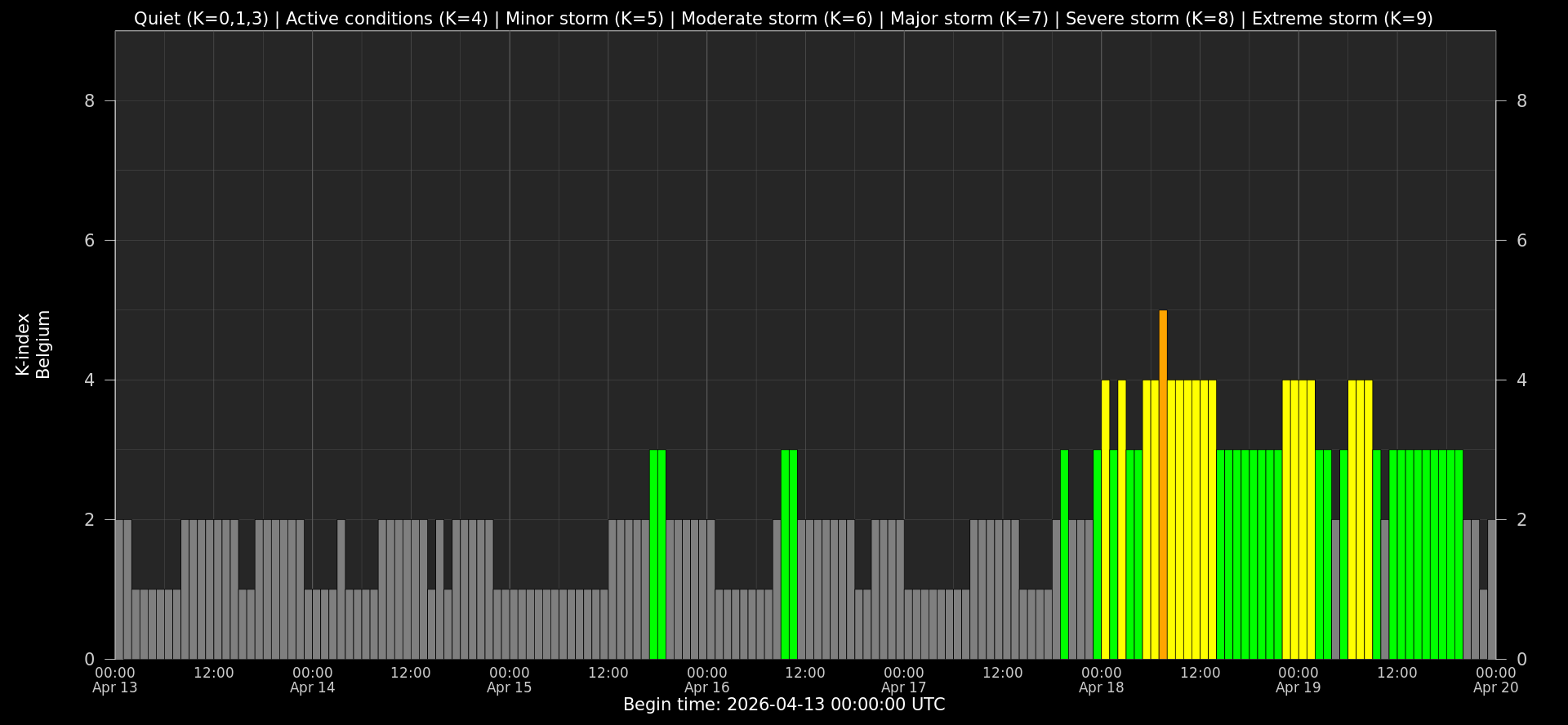
Local K-type magnetic activity index for Belgium based on data from Dourbes (DOU) and Manhay (MAB). Comparing the data from both measurement stations allows to reliably remove outliers from the magnetic data. At the same time the operational service availability is improved: whenever data from one observatory is not available, the single-station index obtained from the other can be used as a fallback system.
Both the two-station index and the single station indices are available here: http://ionosphere.meteo.be/geomagnetism/K_BEL/
STCE in action: courses and show!
Courses, seminars and events with the Sun-Space-Earth system and Space Weather as the main theme. We provide occasions to get submerged in our world through educational, informative and instructive activities.
* May 22-25, 2026, STCE show at Nerdland (https://www.nerdlandfestival.be/nl/) - In the eye of a solar storm (Dutch)
* Jun 15-17, 2026, STCE Space Weather Introductory Course, Brussels, Belgium - register: https://events.spacepole.be/event/256/
* Oct 12-14, 2026, STCE Space Weather Introductory Course, Brussels, Belgium - register: https://events.spacepole.be/event/257/ - Reserved
* Nov 2-6, 2026, European Space Weather Week, Florence, Italy, https://esww2026.eswan.eu/
* Nov 23-25, 2026, STCE course: Role of the ionosphere and space weather in military communications, Brussels, Belgium - register: https://events.spacepole.be/event/259/
* Dec 7-9, 2026, STCE Space Weather Introductory Course for Aviation, Brussels, Belgium - register: https://events.spacepole.be/event/262/
To register for a course and check the seminar details, navigate to the STCE Space Weather Education Center: https://www.stce.be/SWEC
If you want your event in the STCE newsletter, contact us: stce_coordination at stce.be
Website: https://www.stce.be/SWEC