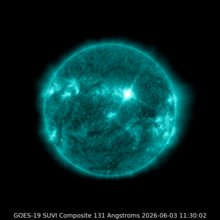
NOAA 4455 produced 2 strong M-class flares and one X1 flare in less than 12 hours. The related coronal mass ejections are expected to hit the near-earth environment from late on 4 June through 5 June. There's a small chance for auroras over Belgium. UPDATED (1).
view
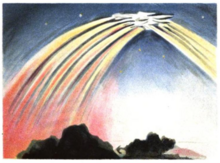
The great geomagnetic storm of 4 February 1872 is renowned for its splendid aurora and crippling the telegraphic services worldwide, even at near-equatorial locations.
view
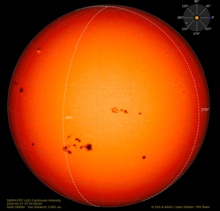
A large sunspot group which was flare active on the Sun's far side, had quieted down significantly when facing the Earth a week later.
view
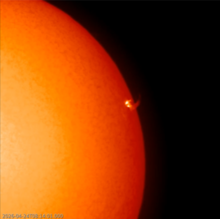
Despite bad seeing conditions, the H-alpha solar telescope of the ROB/USET was able to observe the X-class flare of 24 April.
view
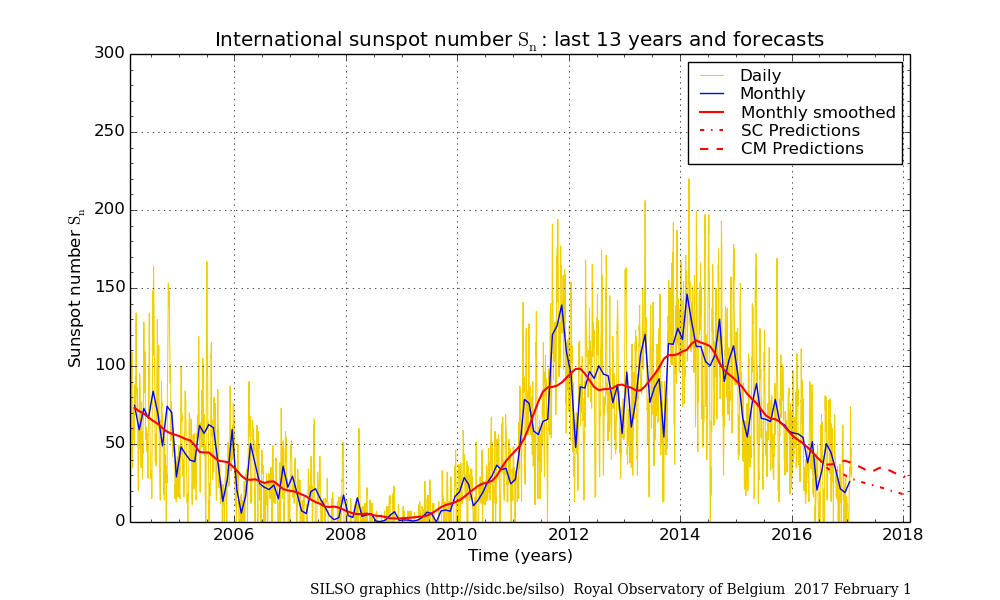 The STCE does Fundamental Research.
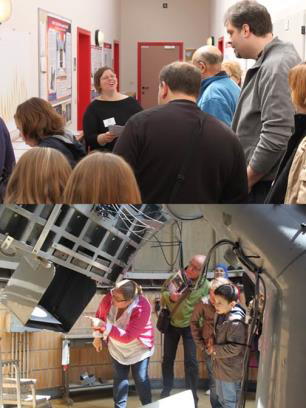 The STCE does public outreach during the STCE Annual Meeting and the Open Doors of the Space Pole in Uccle.
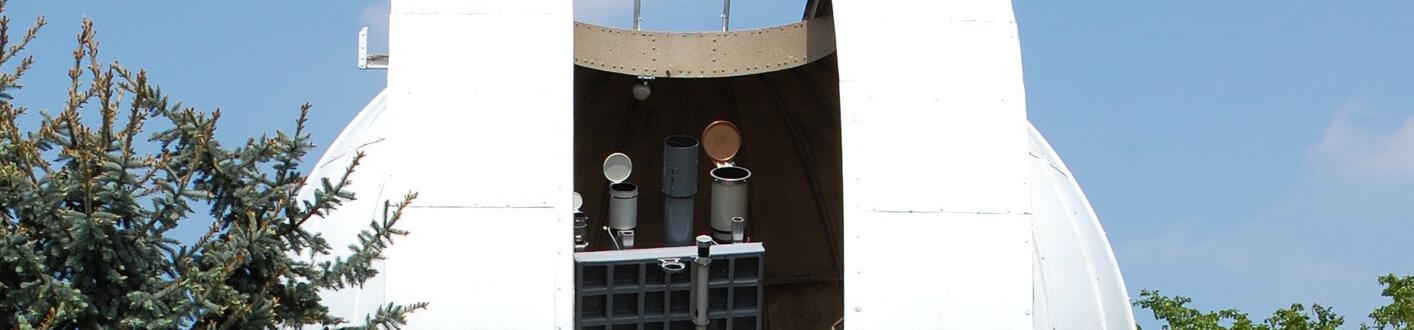
One of the highlights of the Open Doors is always a visit to the Solar Dome. A small introductory presentation is first given in the corridor of the SIDC. Skilled observers and space weather forecasters explain in laymen terminology what sunspots are, how they are observed, why these observations are so important, and how solar eruptions affect us and our technology. Then, the small groups of 10-15 people are guided stairs towards the top of the solar dome. There, the various solar telescopes are shown and their specific applications are discussed. Weather permitting, the visitors can also make solar observations using a projected solar image from the white light solar telescope. During and after the visit, there is plenty of opportunity to ask questions to the guides.
Zircon - This is a contributing Drupal Theme
Design by
WeebPal.