An inflight incident with an Airbus 320 on 30 October was most likely triggered by the impact of a high-energy particle resulting in an uncalled Single Event Upset ("bit flip"). The required soft- and/or hardware patch grounded 6000 aircraft.
Recent recall of the Airbus A320 fleet
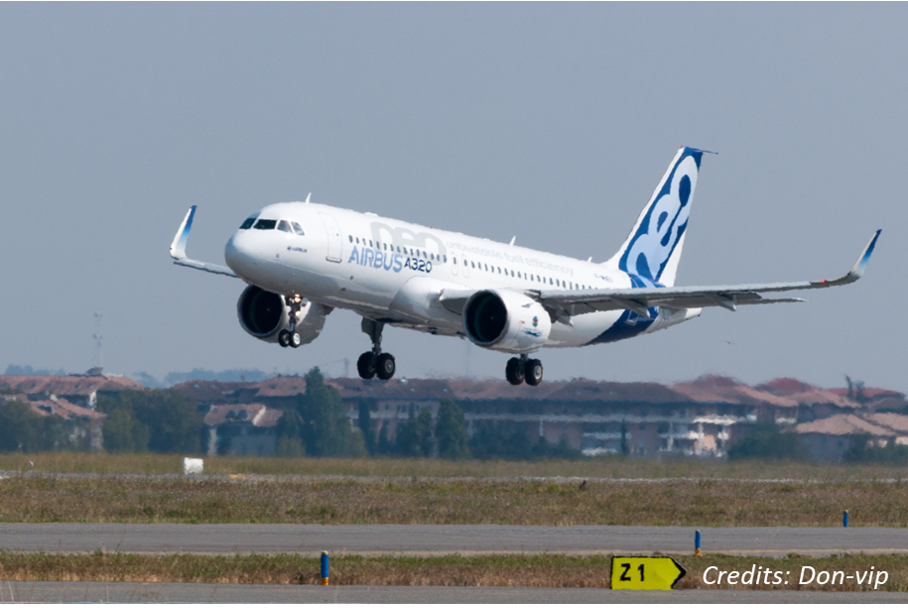
On 28 November 2025, Airbus issued an emergency global recall of around 6000 of its A320-family aircraft - roughly half of the world's in-service Airbus fleet (Airbus communication). The action followed an inflight incident on 30 October 2025 affecting JetBlue Airways Flight 1230 (A320), which experienced a sudden, uncommanded "pitch-down" while cruising from Cancún (Mexico) to Newark (USA). The aircraft rapidly lost altitude before the autopilot recovered, and the plane was safely diverted to Tampa, Florida. At least 15 passengers reportedly suffered injuries of various severities and required hospitalization.
Airlines operating A320-family jets worldwide - from U.S. carriers to European, Asian and Latin American airlines - were affected by the recall. In the United States, the recall happened just prior to Thanksgiving, with the delays and cancellations frustrating the passengers. Even an ITA Airways Airbus A320neo aircraft operating the first international journey undertaken by Pope Leo XIV was confined to ground until it had undergone the necessary modifications before returning again to service (NC Register).
By 1 December 2025, the vast majority of the A320s had already been updated or reverted to a safe software version; only a small minority - fewer than 100 jets - remained grounded awaiting the final fixes.
Source of the recall: the JetBlue 1230 incident and spaceweather context
The triggering event for the recall was the JetBlue 1230 flight incident that occurred on 30 October 2025. The root cause was traced to a failure in the A320's flight control computer, specifically the Elevator and Aileron Computer (ELAC). According to investigators, during the incident the ELAC 2 module recorded a sudden, uncommanded elevator deflection resulting in a dramatic descent. Cruising at 35000 feet altitude with the autopilot engaged, at 17:48 UTC the aircraft experienced an uncontrolled pitch-down event for about 4-5 seconds before autopilot corrected. This resulted in a sudden loss of altitude (about 100 feet), upon which the aircraft made an emergency landing at Tampa, Florida 30 minutes later (Aviation Safety Network).
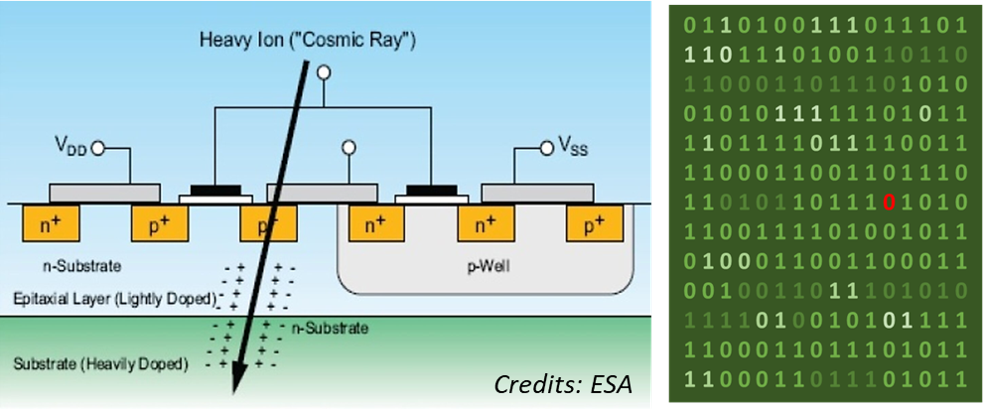
Airbus analysed multiple scenarios on possible causes of this event using their advanced development test simulator. This simulator is coupled with real aircraft components (computers, hydromechanical components, ...). The result led the investigation team to rule out all scenarios, except the potential impact from a Single Event Upset caused by radiation. Indeed, high-energy particles can trigger a Single Event Upset (SEU) in an aircraft or a satellite by penetrating onboard electronics and flip bits (a "0" becoming "1" or vice versa) in digital circuits, as shown in the ESA sketch underneath. Based on this information, and with safety as their top priority, Airbus took the action to require software changes on affected aircraft, in full liaison with the airworthiness authorities.
In its public communication (Airbus communication), Airbus indicated that "intense solar radiation" (e.g., from solar energetic particles) may corrupt flight control data - a vulnerability not fully considered in the original certification. Because the failure was attributed to radiation-induced "Single Event Upsets" (SEUs) in micro-electronics, many commentators immediately looked into spaceweather data to assess whether the solar environment on 30 October was unusually hostile. Indeed, SEUs are more directly linked to proton events, i.e. bursts of high-energy particles, that occasionally occur during intense solar flares. As no proton event was in progress late October, most radiation-and-spaceweather experts suggest that the root cause was more likely a high-energy cosmic ray - not sunlight or a solar proton storm - striking the ELAC memory and flipping bits.
Comparison with Qantas 72 (2008)
This is not the first time an "uncommanded pitch-down" has afflicted a modern Airbus fly-by-wire jet. For example, on 7 October 2008, Qantas Flight 72 - an Airbus A330, so a different type than the A320 - experienced a violent descent over the Indian Ocean, injuring over 100 passengers. Investigators from the Australian Transport Safety Bureau (ATSB) deemed a SEU extremely unlikely, and concluded in their final report (issued December 2011) that the incident "occurred due to the combination of a design limitation in the Flight Control Primary Computer (FCPC) software of the Airbus A330/A340, and a failure mode affecting one of the aircraft's three Air Data Inertial Reference Units (ADIRUs). The design limitation meant that in a very rare and specific situation, multiple spikes in AOA (angle-of-attack) data from one of the ADIRUs could result in the FCPCs commanding the aircraft to pitch down." (ATSB)
In the Qantas 72 case, the ADIRU produced intermittent erroneous AOA data spikes; two spikes spaced about 1.2 seconds apart fooled the flight control computers into thinking the aircraft was stalling, prompting an automatic nose-down command. After the incident, Airbus redesigned the FCPC AOA-processing algorithm and modified ADIRU hardware to prevent recurrence (ATSB).
Thus, both the 2008 and 2025 incidents share a common underlying vulnerability: rare, unexpected faults in flight-data systems (whether ADIRU in 2008, or ELAC in 2025) that produce erroneous data, leading to dangerous automated control responses. But while the Qantas 72 failure was related to internal software issues and hardware limitations, the JetBlue/A320 case was rooted in external radiation interacting with micro-electronics, which is a fundamentally different trigger.
Influence of the 11-12 November 2025 solar storm
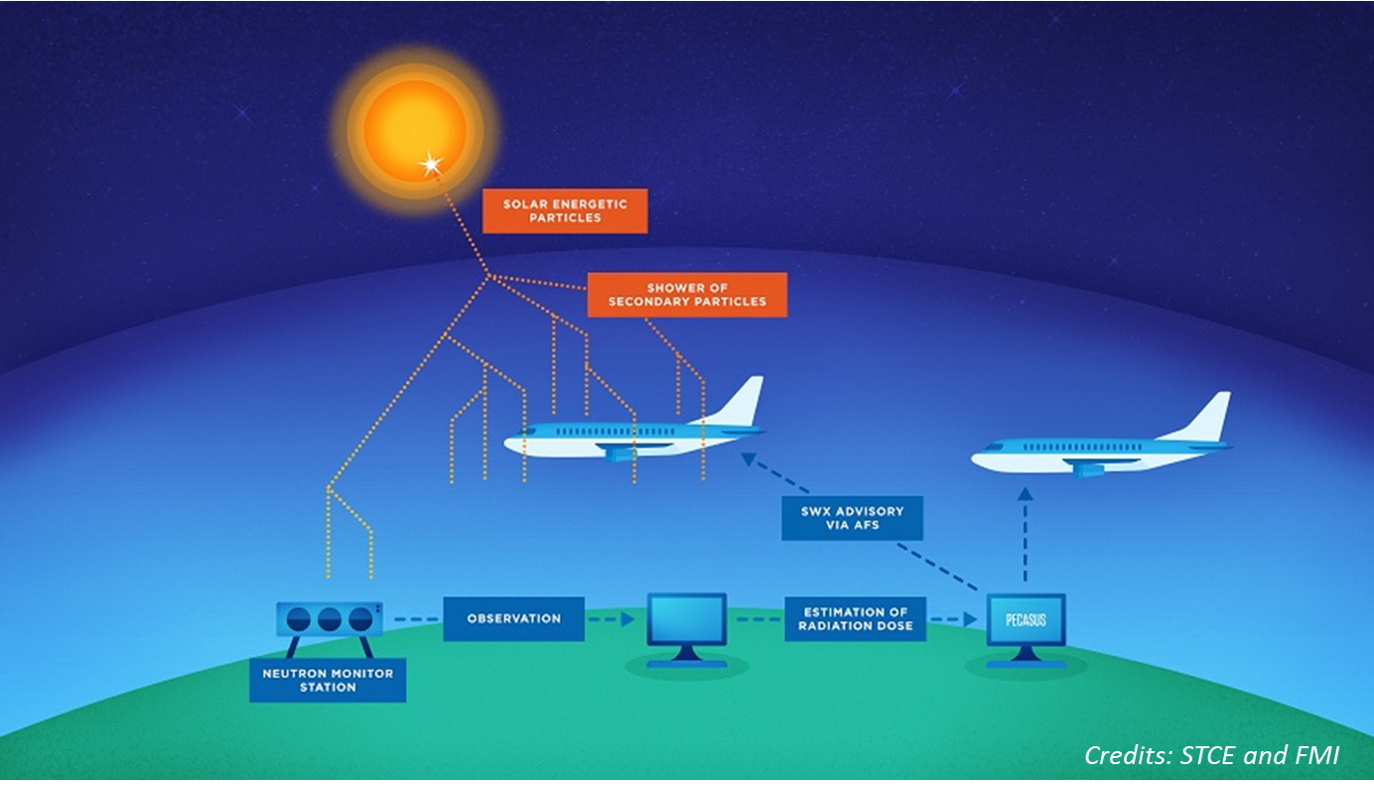
Some two weeks after the JetBlue incident, on 11 November 2025, the Sun unleashed a powerful solar eruption: an X5 flare from sunspot region NOAA AR 14274 associated with a coronal mass ejection (CME) and intense proton event (see the STCE newsitems here and here). This proton event triggered a rare Ground Level Enhancement (GLE), meaning that the solar protons were so energetic that they created secondary particles such as neutrons in the upper atmosphere which in turn showered down to the Earth's surface where they were detected with neutron monitors (see sketch underneath). This was only the 77th GLE recorded since systematic measurements began in the 1940s (see the University of Oulu for an overview).
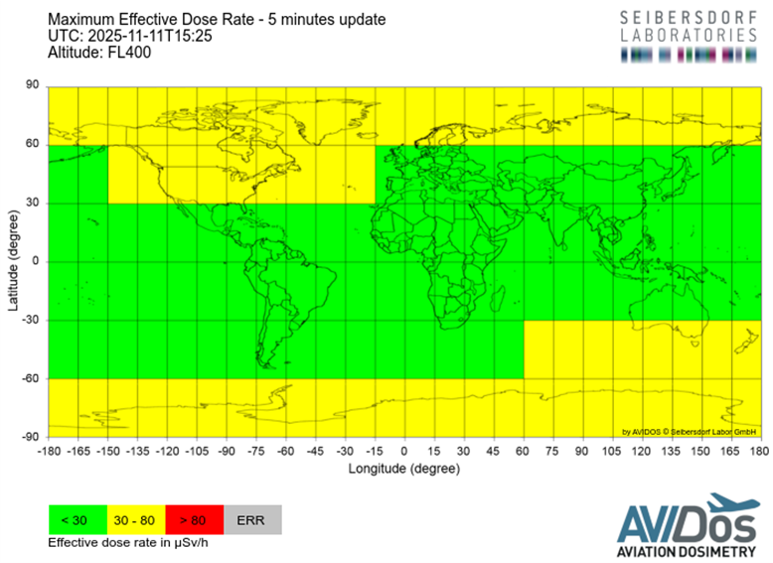
Atmospheric monitoring during the storm (e.g., via balloon-borne sensors developed by the University of Surrey and operated by the UK Met Office and the KNMI) detected radiation dose rates at typical commercial flight altitudes (about 12 km / 40000 ft) rising to nearly ten times the normal dose rate from the regular cosmic ray background - the highest levels at aviation altitude in almost 20 years (see also the AVIDOS dose rate map underneath). High-latitude transatlantic routes likely received roughly twice their normal cosmic ray dose during the peak of the event (The Watchers ; Spaceweather.com). That's not enough radiation to cause a health emergency for passengers, but it was a concern for avionics. Radiation experts at the UK Met Office (among others) noted that during the peak of the November storm, Single Event Upsets in aircraft memory modules could reach "around 60 errors per hour per gigabyte" (University of Surrey). While this does not necessarily cause a crash on its own, bit flips in critical flight control computers like ELAC can - if not properly mitigated - produce errors like those observed on JetBlue 1230.
Although this November storm dramatically illustrated how severe solar events can elevate atmospheric radiation and therefore increase the risk of SEUs in aircraft electronics, it occurred after the JetBlue incident and before the results of the initial investigation into it were known. So, the storm itself did not trigger the grounding of the A320 fleet, nor was it causally linked to Flight 1230. Nonetheless, the storm underlines a growing concern for aviation: as the Sun is still near maximum activity in its current solar cycle 25, the chance on a (more) intense solar particle event (SPEs) that can flood the atmosphere with high-energy protons which are capable of corrupting avionics, is real. It is a sobering thought that the intensity of the 11 November event is only a fraction of that of the largest solar radiation storm on record in 1956, and that this 23 February 1956 event itself is dwarfed by the so-called "Miyake events", extremely strong radiation events that occur only once every 1000 to 10000 years (STCE newsitem ; Cliver et al. 2022).
Conclusions
The 2025 recall of roughly 6000 A320-family jets represents one of the most sweeping safety measures in modern commercial aviation. The precipitating event - the sudden pitch-down on JetBlue Flight 1230 - exposed a critical vulnerability in the ELAC flight control computer to radiation-induced data corruption. While Airbus publicly cited "intense solar radiation", the lack of any documented major solar flare or proton event on 30 October makes a cosmic ray induced Single Event Upset the most plausible root cause.
A comparison with the 2008 Qantas Flight 72 incident underscores that pitch-down failures in fly-by-wire aircraft are not new; what is new in 2025 is the scale of the affected fleet, and the involvement of spaceweather threats rather than internal soft- or hardware bugs.
The powerful solar storm of 11-12 November 2025 - though unrelated to the JetBlue incident - demonstrated that the atmospheric radiation environment at cruising altitudes can, under extreme conditions, surge to levels at least an order of magnitude above normal cosmic ray background. Such events significantly raise the risk of SEUs in aircraft electronics. As solar activity remains at high levels during the current solar cycle maximum, it seems good practice to harden critical avionics against particle-induced bit flips through technical hard- and software improvements, applying redundant systems as well as using real-time spaceweather monitoring.