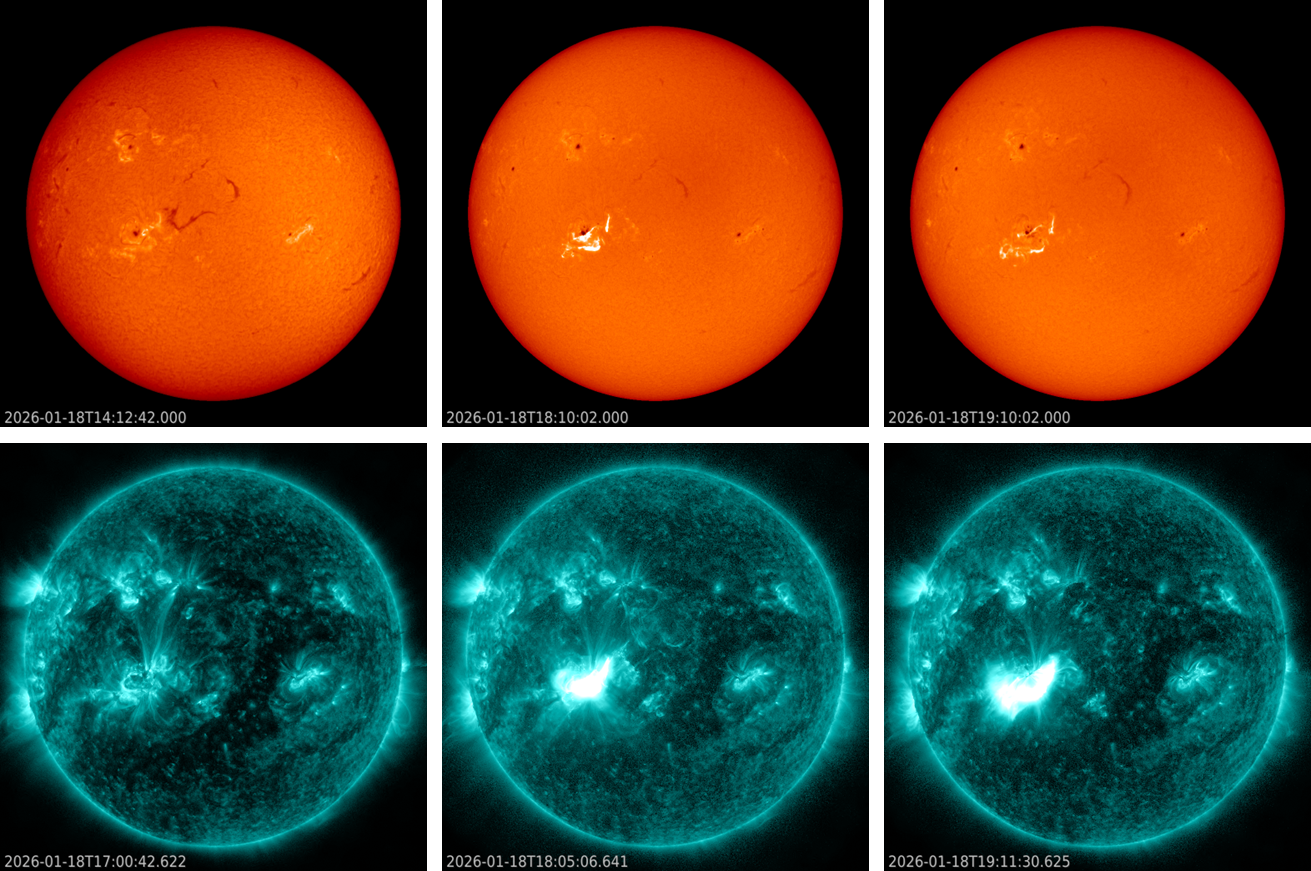
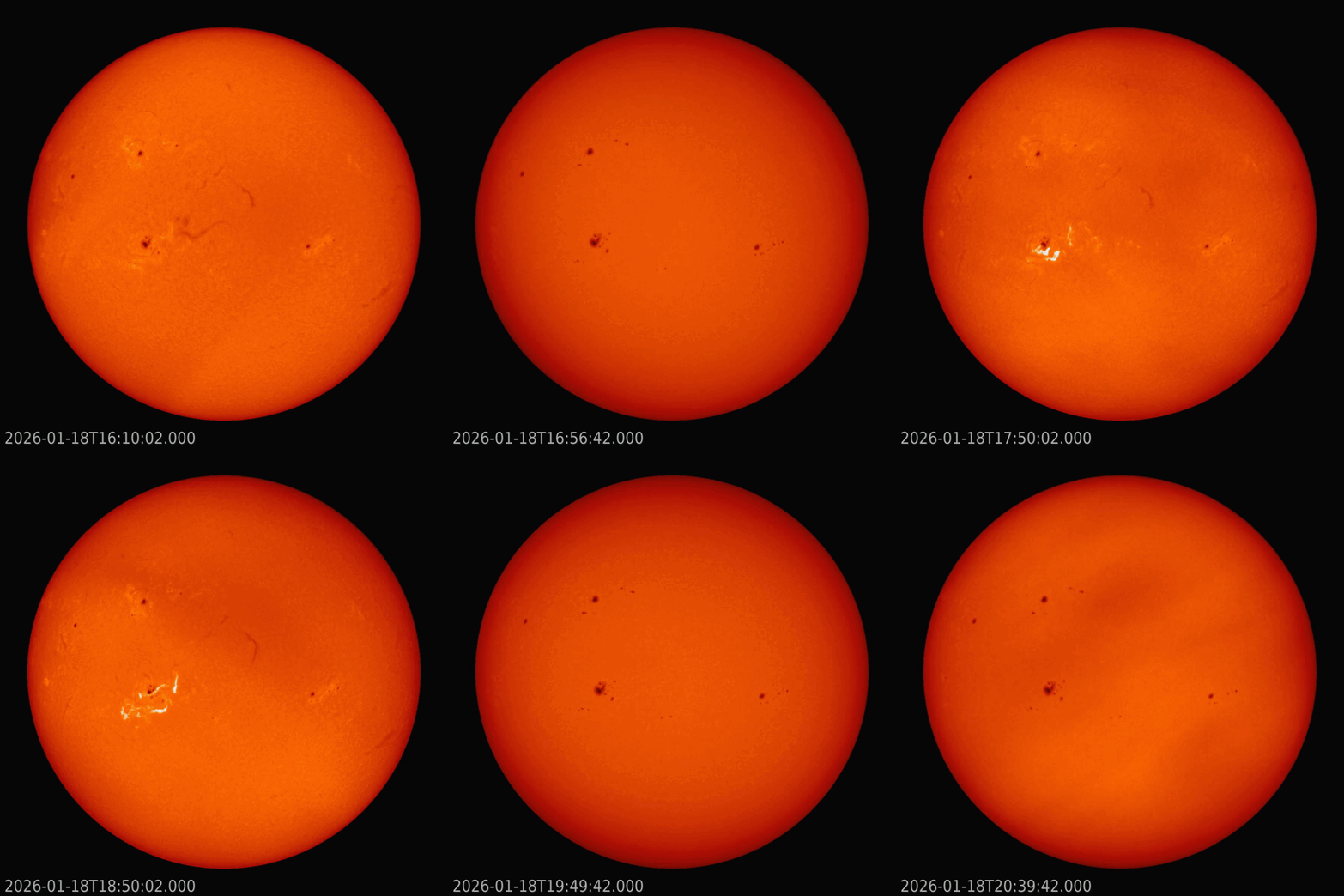
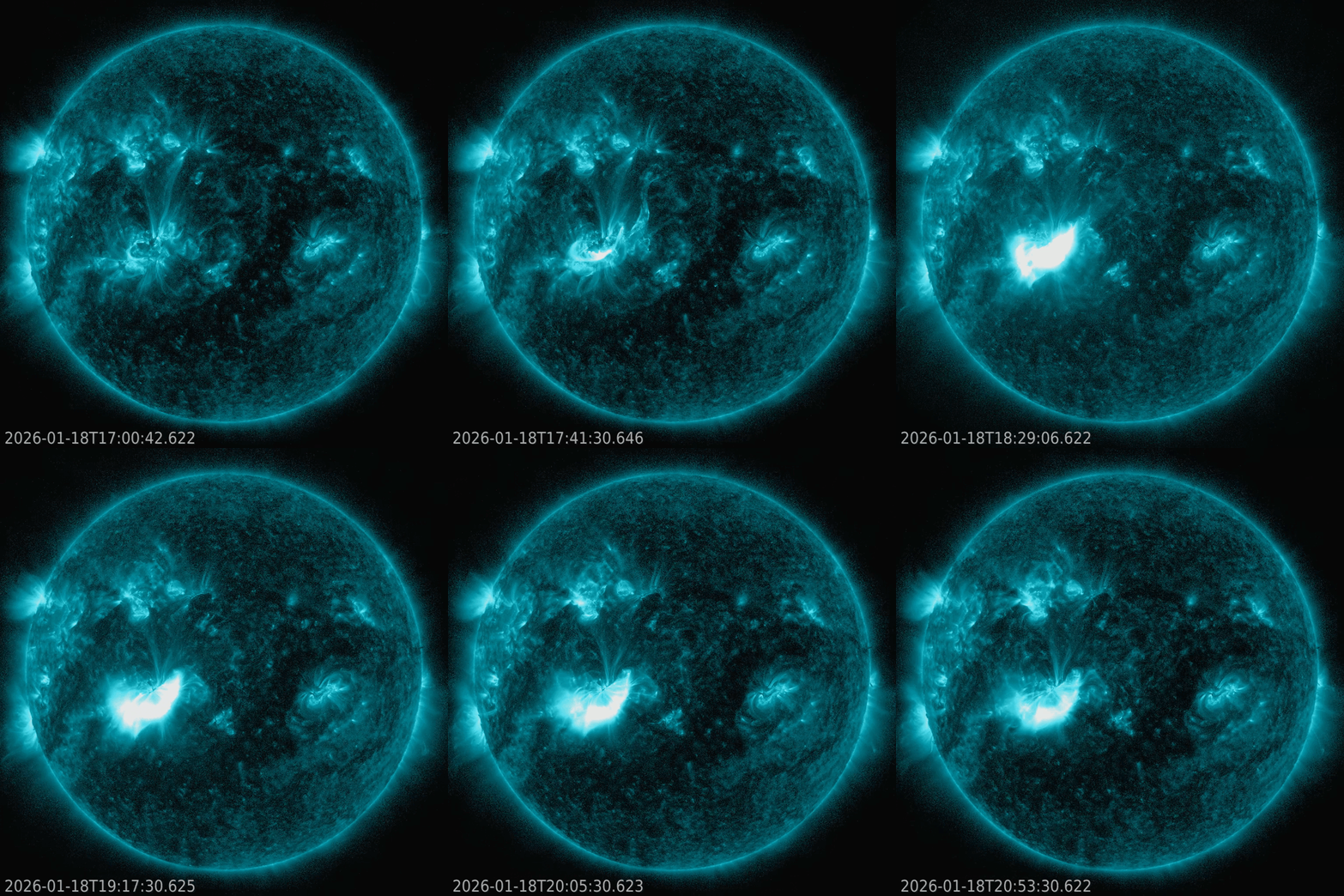
SIDC sunspot group 740 (NOAA 4341) is the largest and most complex active region currently on the solar disk. It was showing some signs of decay (smaller sunspot area, no more delta structures,...) when all of a sudden it produced a major long-duration event on 18 January. This X-class flare started at 17:27 UTC, peaked at 18:09 UTC (X1.9), and ended at 18:51 UTC. The main reason for the eruption was the growing unstability of the surrounding filaments. Solar filaments are clouds of charged particles ("plasma") above the solar surface squeezed between magnetic regions of opposite polarity. Being cooler and denser than the plasma underneath and their surroundings, they appear as dark lines when seen on the solar disk. Special filters are required to observe these features, and one such a filter is the Hydrogen-alpha (H-alpha) line in the red part of the solar spectrum. The unstable filaments in NOAA 4341 eventually resulted in a stunning eruption both in H-alpha (GONG) as well as in extreme ultraviolet (EUV ; SDO/AIA 131). The imagery underneath shows the eruption in H-alpha (upper row) and in EUV (lower row) at the beginning, peak and ending of the flare. Note how, in the H-alpha clip, the filaments south and to the west of NOAA 4341 have disappeared after the flare. The "smudges" are due to passing clouds.
 |
 |
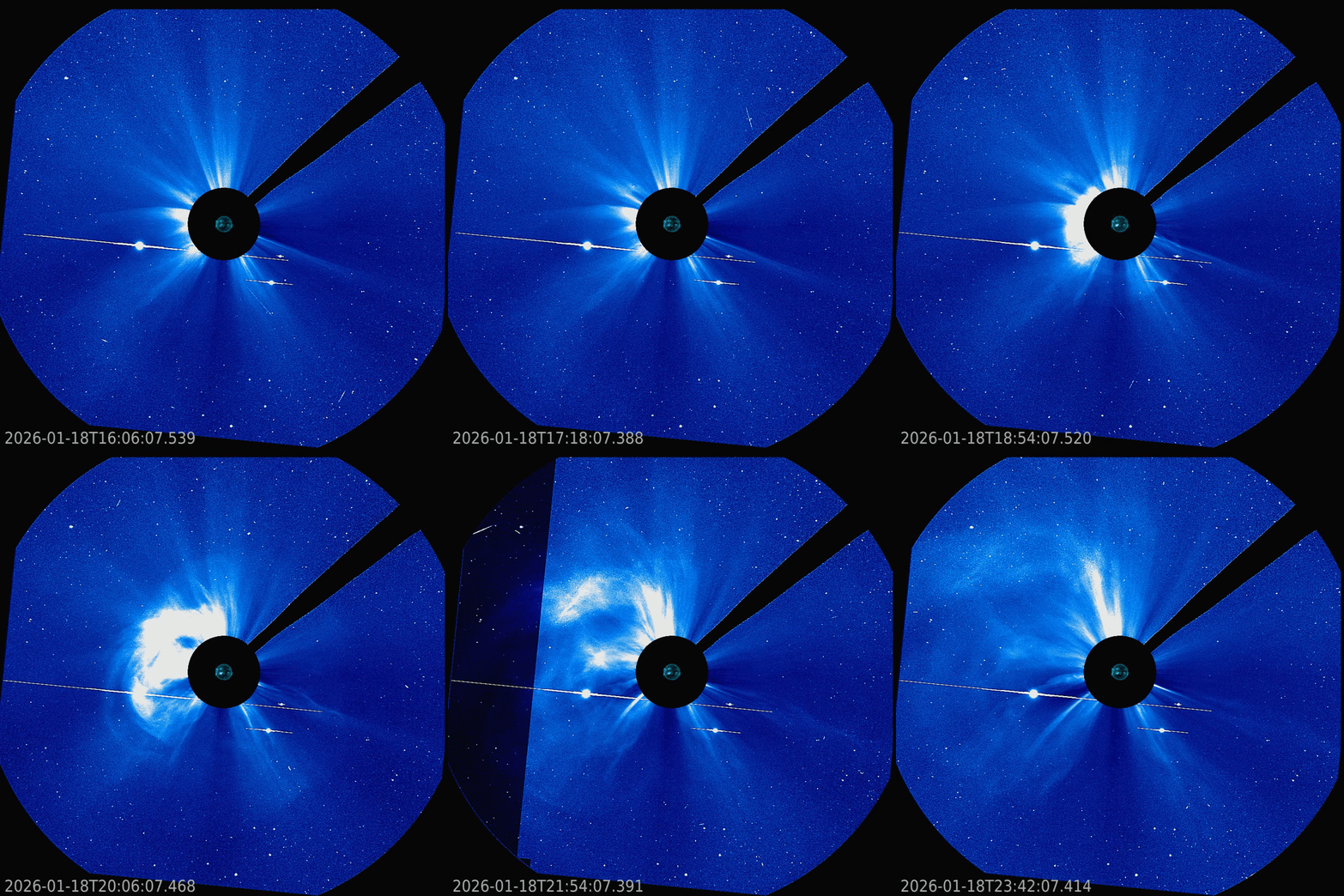
Associated with this eruption was a fast full halo coronal mass ejection (CME). The preliminary speed of this wide CME is estimated to be 1500-1800 km/s based on STEREO-A coronagraphic observations. Though the bulk of the CME seems to be directed behind (trailing) the Earth, there's still a strong earth-directed component thought to start affecting the earth environment during the first half of 20 January. Moderate to severe geomagnetic conditions (Kp 6 to 8) are possible. This means that there's a small chance on aurora over Belgium if the high Kp values materialize during the nighttime. Standing-by for the SIDC space weather forecaster analysis for a more finetuned prediction. Solar Orbiter is currently almost between the Sun and the Earth, and so its MAG instrument, which measures the magnetic field of the solar wind (Imperial College London), may provide an early warning of the interplanetary CME as it is heading towards Earth. Underneath are images by the SOHO/LASCO C3 coronagraph of the halo CME, overlaid on SDO/AIA solar images in EUV. The 3 bright dots near the Sun and the occulting disk are planets, resp. (from left to right) Venus, Mercury and Mars. They are all located on the other side of the Sun as seen from Earth, a so-called "superior conjunction".
The eruption was also associated with a strong proton event (protons with energies exceeding 10 MeV), passing the alert threshold on 18 January at 22:55 UTC (GOES). The maximum peak reached so far was 1990 pfu (proton flux units) at 13:25 UTC, making it the strongest proton event so far this solar cycle. However, because the flux of the more energetic protons (energies of several 100 MeV) remained mostly at background levels, no Ground Level Enhancement (i.e. increase in natural radiation at the surface of the Earth) was observed. Hence, the radiation hazard for astronauts and for passengers/crew on polar flights remained low.
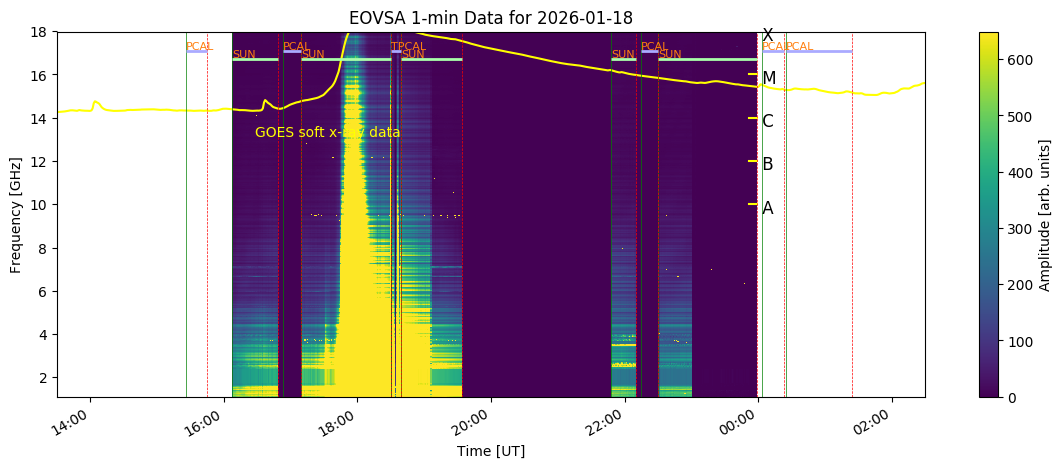
The flare was also associated with radio noise on all frequencies observed, as shown in the EOVSA graph underneath (Expanded Owens Valley Solar Array). NOAA/USAF stations reported enhancements of several thousands of solar flux units (sfu) at all observed frequencies, with the least enhancement at GNSS frequencies (1415 MHz). Thus, satellite communications were most likely little to not affected by this solar radio burst. The Penticton values for the 10.7 cm solar radio flux, used e.g. as an input for satellite drag calculations, were all 3 affected (much higher than normal).
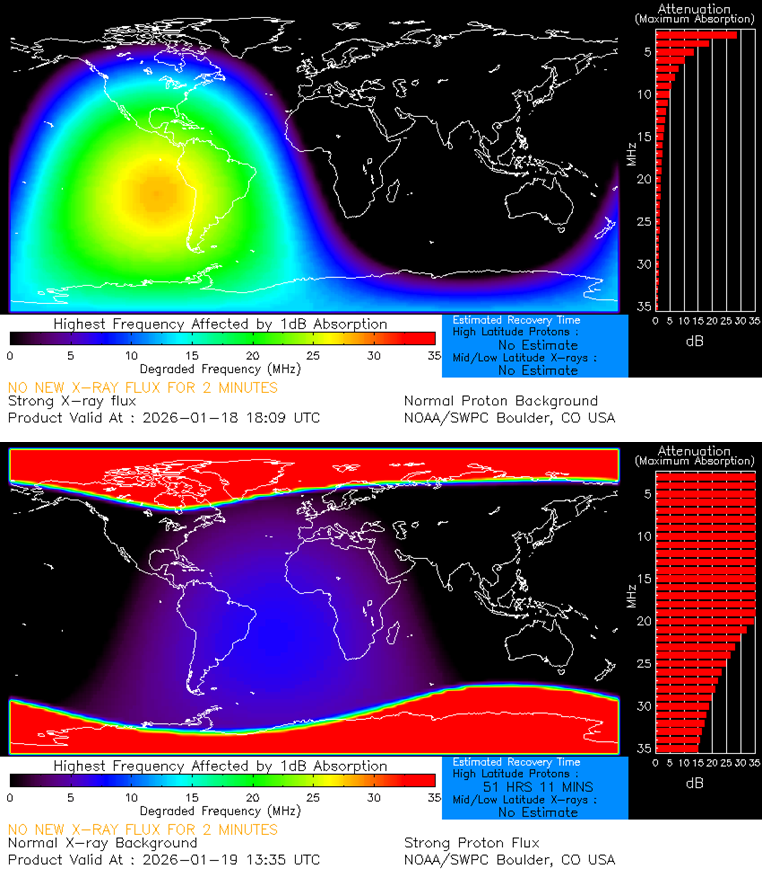
The x-ray and EUV radiation from the X1 flare affected the ionosphere on the dayside of the Earth, affecting the lower portion of the High Frequency radio communication (HF Com ; 3-30 MHz). Also the high proton flux is currently affecting HF Com, but this time almost over the entire HF range and only over the polar regions, a so-called Polar Cap Absorption (PCA). There's a chance that the PCA lasts until 20 and possibly even 21 January, and that HF radio communication over the polar caps is not possible during that timeframe. The D-RAP maps (NOAA) underneath show the impact of the flare (top) and proton event (bottom) on the HF Com, both location and intensity ("attenuation").